

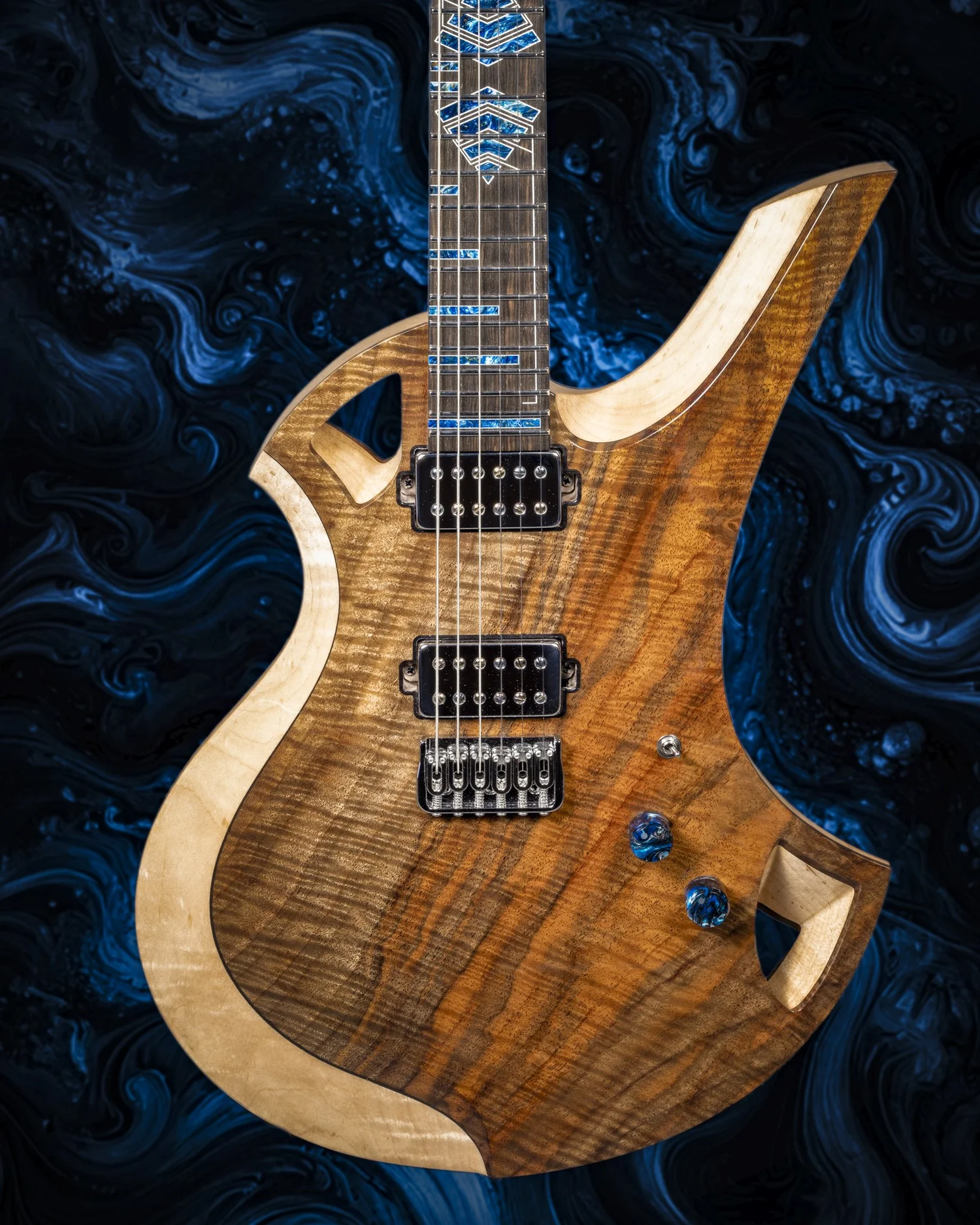
Holes In Guitars
Weight relief led to the Scarab’s body openings. Rick Turner’s Pretzel helped inspire the idea; laminates, bevels, and CAD gave the openings their twisting geometry.
If Stradivari Were Alive Today...
Would Stradivari reject a computer on the bench? Will Bezard considers instrument making, acoustic measurement, intuition, and the tools that help a builder learn.
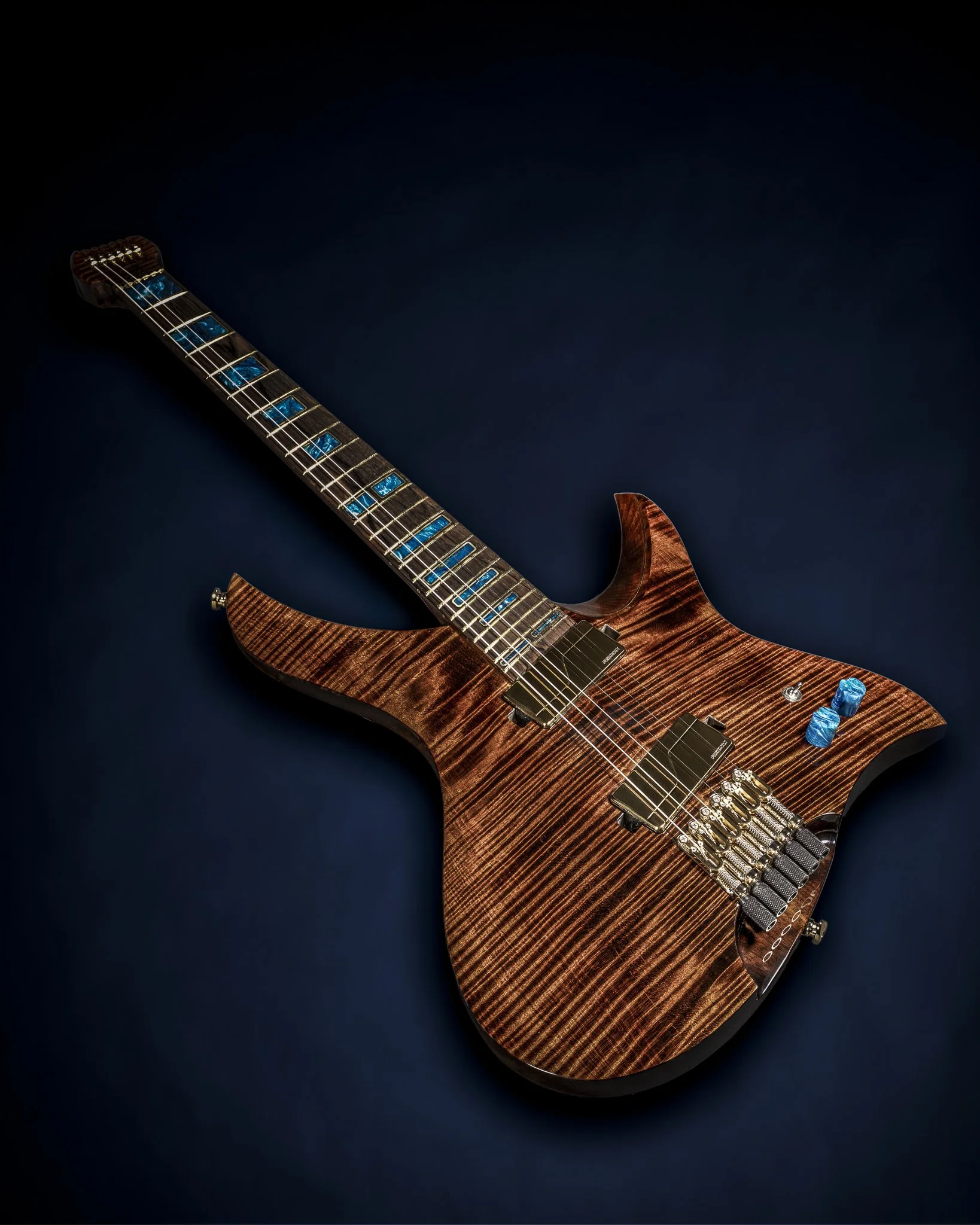
Why the Famine Guitar and Bass Bodies Are Radiused
The radiused bodies on the Famine Guitar and Famine Bass came from a mix of geometry, curiosity, and ideas I had already been exposed to while working for Rick Turner.
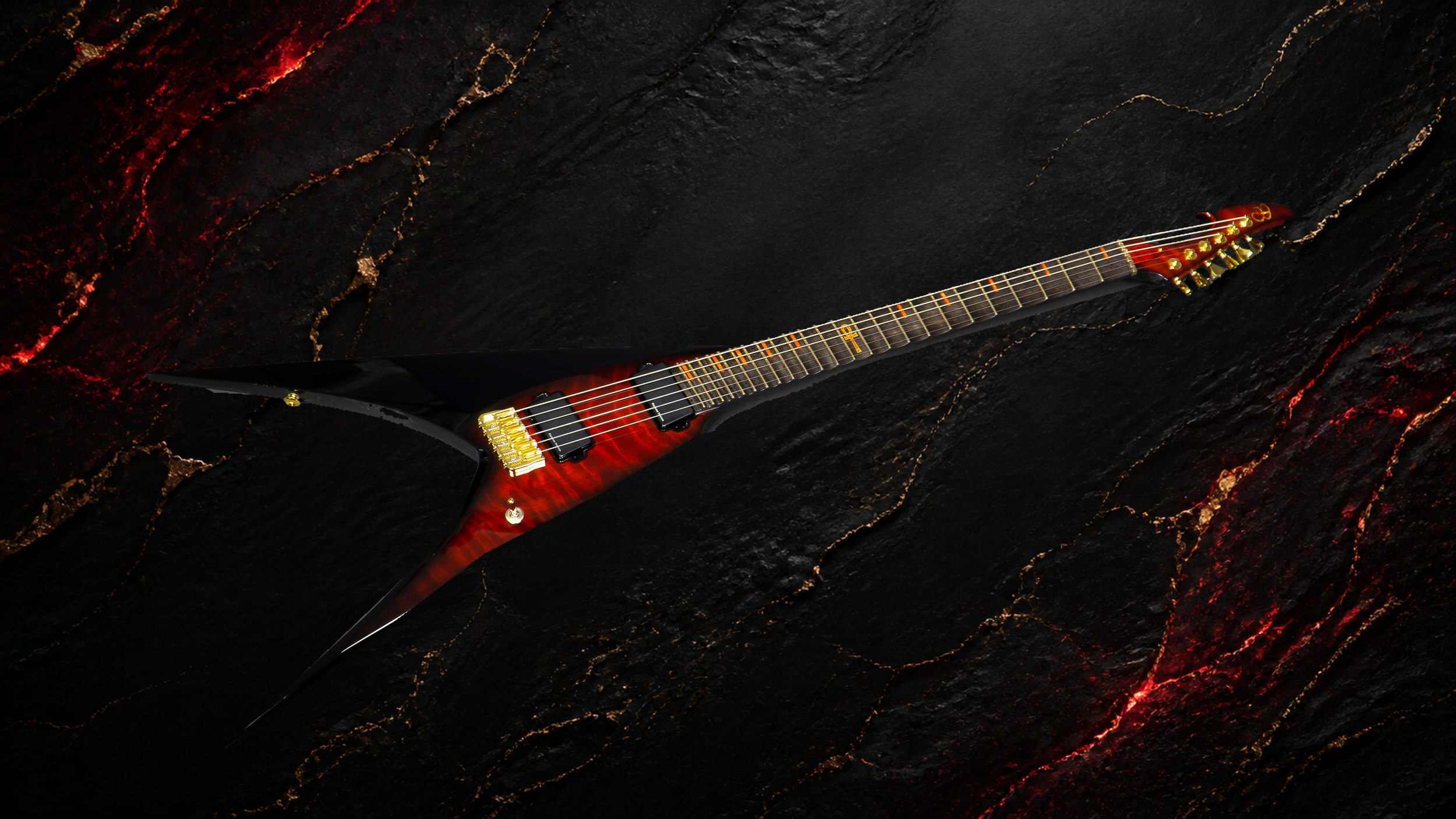
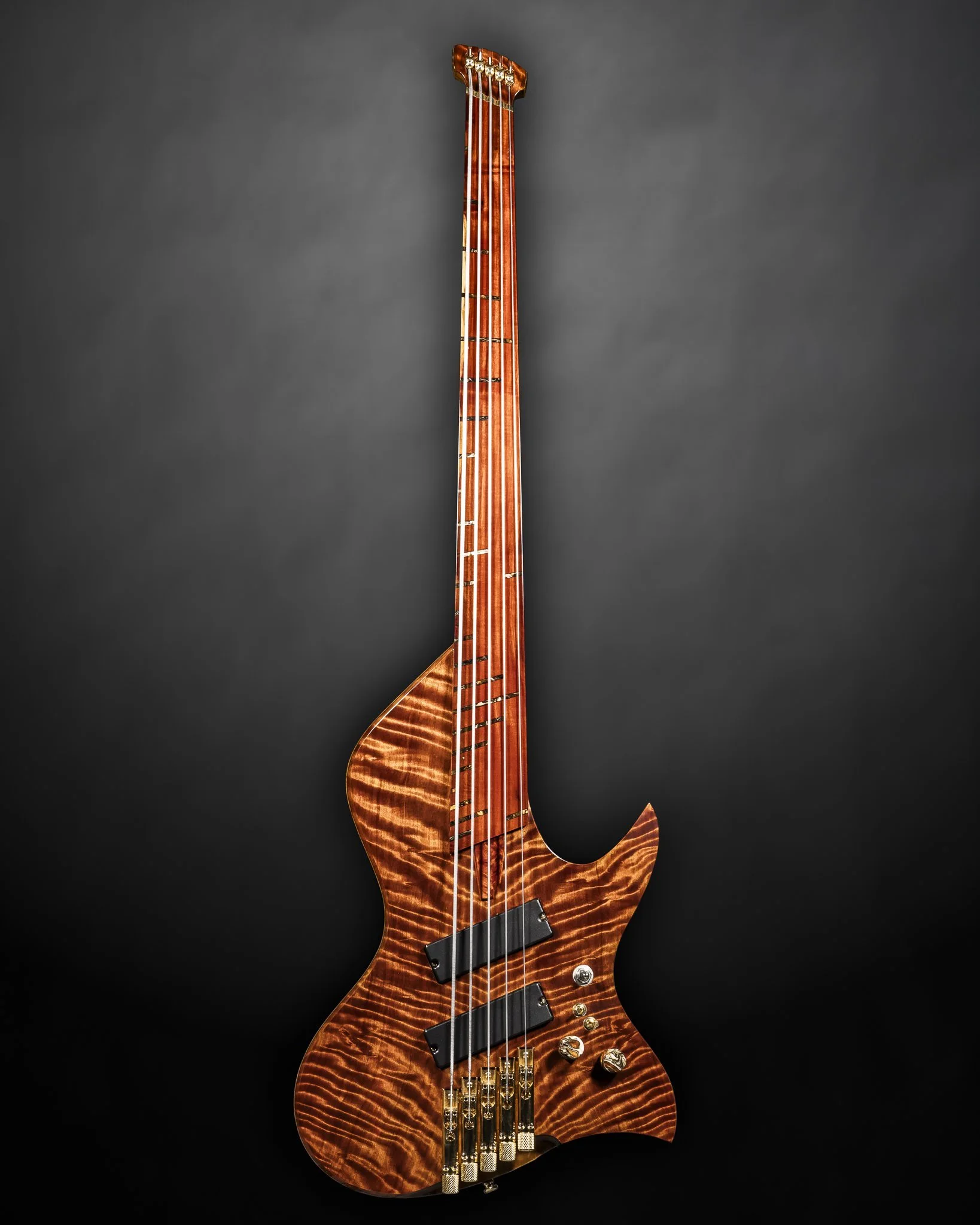
Fretless AND Multiscale? Why?
Why build a fretless bass with a 37–35-inch multiscale? An instrument spotlight on the tension, geometry, ergonomics, and string choices behind this figured-redwood Famine five-string.


Technology and Tradition
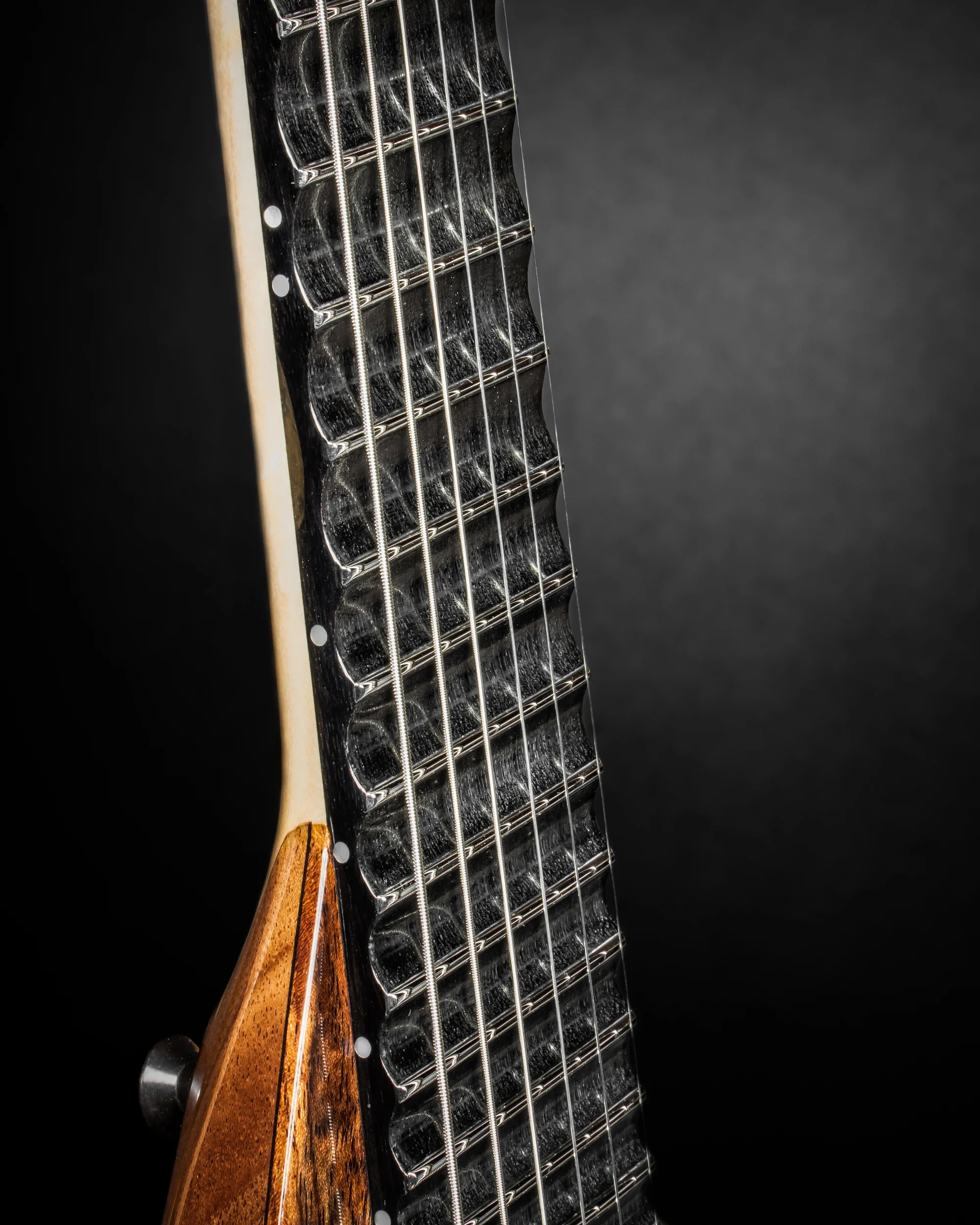
Bezard Guitars exist at the intersection between ancient and tomorrow. They are built from the belief that tradition and technology are not enemies, and that the strongest instruments come from decisions that are deliberate, useful, durable, and honest.





The Guitar is Not a Toy
The guitar is far more than a plaything. It's a vessel for storytelling, cultural change, and emotional truth—crafted with precision, wielded with purpose. This article explores why calling the guitar a “toy” not only misses the mark, but disrespects the legacy of players and makers alike.

Why Boutique Guitars Are Worth the Investment — A Bezard Guitars Perspective
In a sea of mass-produced instruments, Bezard Guitars offers something different — handcrafted guitars built by one luthier, for players who refuse to compromise. This article breaks down why a boutique guitar isn’t just a purchase — it’s a partnership in tone, innovation, and intentionality.